



If you’ve been fighting the same stubborn knot in your shoulder for months, or your hip keeps locking up every time you try to get back into your training routine, you’ve probably Googled your way here. Dry needling treatment is one of the most effective and most misunderstood tools in a physical therapist’s kit. This isn’t a mystical practice or a passing trend. It’s a targeted, evidence-based technique that’s helping active adults across Durham, Charlotte, and Brier Creek get unstuck and get back to the thing they actually miss doing. Let’s break it all the way down.
What Is Dry Needling Treatment, Exactly?
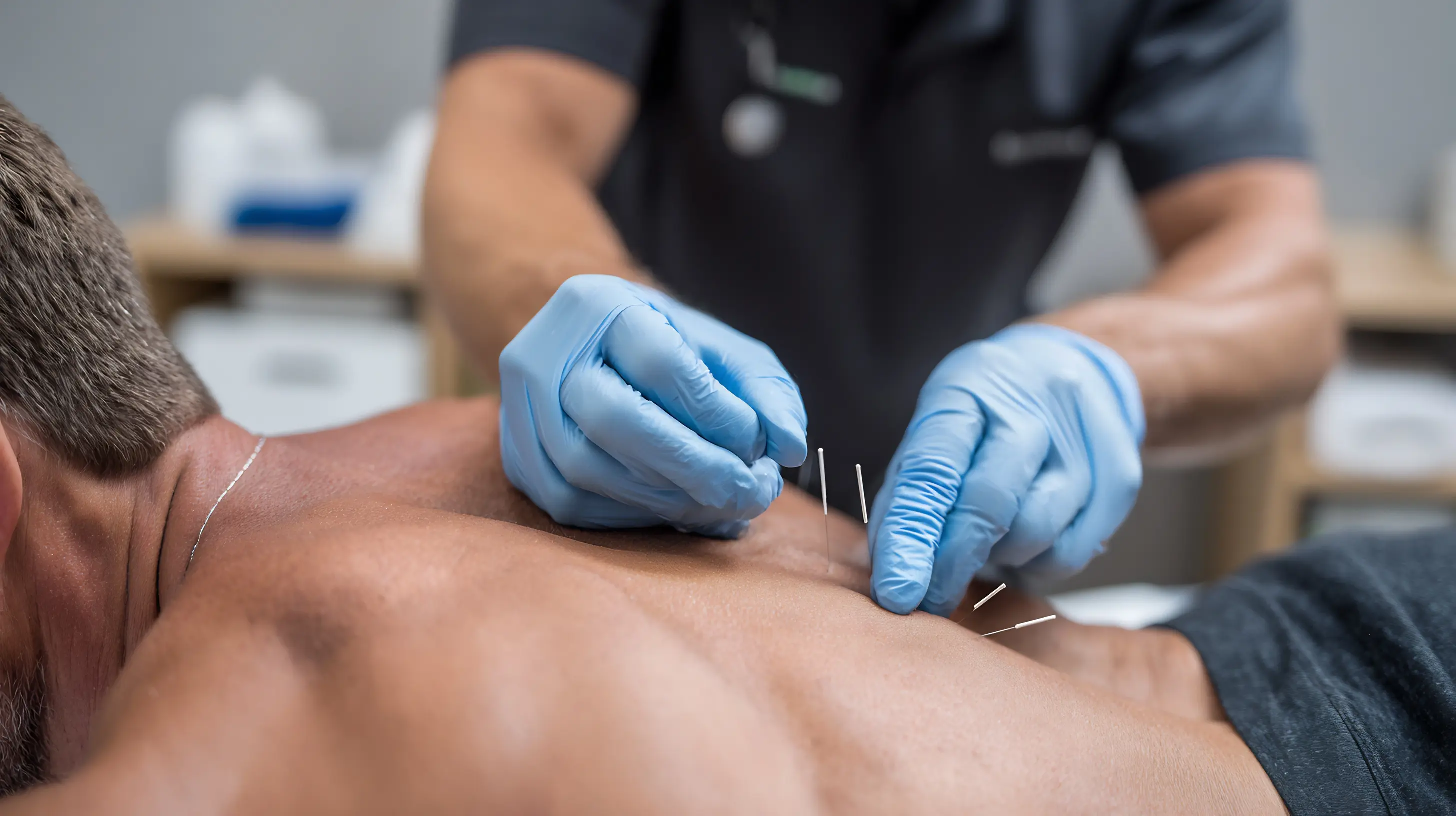
Dry needling treatment uses solid and sterile thin needles roughly the diameter of a human hair, inserted directly into trigger points: the tight, hyper-irritable knots in your muscle that won’t release no matter how much you stretch, foam roll, or ice. The goal is to relieve pain, release muscular tension, increase blood flow, and restore normal movement.
The “dry” part is key: there’s no medication in the needle, and nothing gets injected. It’s the mechanical effect of the needle itself doing the work. Physical therapists trained in this technique use it to address pain and movement impairments rooted in the muscle and connective tissue. The target isn’t just your symptom. It’s what’s causing it.
How Is Dry Needling Different From Acupuncture?
This is the question almost everyone asks before their first session, and it’s completely fair. Both practices involve needles, so the comparison is natural. But dry needling vs acupuncture is a meaningful clinical distinction. Acupuncture is rooted in traditional Chinese medicine and works with energy pathways called meridians to restore balance across the whole system. Dry needling physical therapy comes from Western sports medicine and orthopedics, with the specific aim of targeting musculoskeletal conditions and neuromuscular dysfunction.
Same tool, completely different philosophy, training, and clinical goal. When it comes to dry needling in North Carolina, physical therapists are authorized to perform the technique under the NC Board of Physical Therapy Examiners guidelines. At Bull City PT, it’s always integrated into a clinical treatment plan built around your specific movement goals, never applied as a standalone procedure.
How Do Thin Needles Actually Relieve Muscle Pain?
Here’s where it gets interesting. When a muscle gets overworked or caught in a cycle of injury and chronic tension, it enters something like an energy crisis. Blood supply tightens up, metabolic waste accumulates in the tissue, and the nerves around that area become hypersensitive. The result is that stubborn, aching knot that doesn’t care how many foam rolling sessions or hot showers you throw at it.
When a very thin needle is inserted into that dysfunctional tissue, it triggers a local twitch response: a brief, involuntary contraction that signals the muscle to release. Fresh blood rushes back in, tissue acidity normalizes, and the nervous system gets a meaningful reset. That reset also involves an endorphin release, which contributes to pain control well beyond just the insertion site. That’s how dry needling works: not by numbing or masking the problem, but by prompting your body to do what it’s already built to do.
What Is a Trigger Point and Why Does It Matter?
A trigger point, often called a myofascial trigger point, is a hyper-irritable spot within a taut band of muscle fiber. What makes them especially tricky is that they rarely stay local. A trigger point in your upper trap can refer pain up into your neck or behind your eye. Hip tightness can show up as knee pain. Most people spend months chasing the pain signal instead of finding where it originates.
This is one of the things that separates trigger point dry needling at Bull City PT from assembly-line physical therapy. Our therapists locate and inactivate trigger points to address the actual root of the problem. That’s what lets patients genuinely improve range of motion, restore functional movement patterns, and break the cycle of recurring injury rather than just patching it until next time.
What Conditions Can Dry Needling Treat?
Dry needling for muscle pain covers a wide range of conditions, and if you’re an active adult, the list likely includes something familiar. Common issues that respond well include low back pain from long hours at a desk or heavy training loads, shoulder and neck tension from overhead lifting or repetitive postures, plantar fasciitis, IT band syndrome, tennis elbow, tension headaches, and post-workout soreness and stiffness that just won’t clear between sessions. Rotator cuff issues, hip flexor tightness, and calf strains that keep stalling your training block are also common targets.
Dry needling therapy isn’t limited to chronic or long-standing conditions. If you’re dealing with overuse from a training block, movement restrictions that have quietly slowed your progress, or a recurring problem that prior physical therapy didn’t fully resolve, dry needling can be the missing piece that finally moves things forward. It can treat pain at its source while also improving how your body moves and loads, which matters just as much for active people as the relief itself. The goal isn’t just to feel better on the table. It’s to move better when it counts.
The question we’re really asking isn’t “how bad does it hurt?” It’s “what can’t you do right now that you want to be doing?” The race, the lift, the weekend pickup game, the ability to pick up your kids without wincing. That’s the target.
What Should You Expect During a Dry Needling Session?
A session at Bull City PT starts with a thorough evaluation of your movement history, current limitations, and goals. Your therapist identifies the specific trigger points contributing to your muscle pain and movement impairments, then uses thin needles inserted at precise depths into those areas. Wear loose clothing to allow easy access to the muscles being treated. You’ll want that flexibility.
Once the needle contacts the trigger point, you may feel the local twitch response: a brief, cramp-like sensation that resolves within a second or two. Most patients describe it as sharp for just a moment, then immediately better. Some areas provide more feedback than others, and that variability is actually useful clinical information. A chronically tight, overworked muscle has more to say than a healthy one, and your therapist is listening to all of it.
After the session, some soreness and mild bruising around the treatment site are normal and typically resolve within 24 to 48 hours. Stay hydrated, keep movement gentle that first evening, and you’ll usually notice a meaningful shift within a day or two. Light activity and walking are typically fine; just hold off on intense training until the initial soreness clears. Dry needling at Bull City PT is always part of a larger treatment plan, built into your recovery strategy as one targeted tool with a specific role, not a one-size-fits-all fix.
Does Dry Needling Hurt?
Directly: less than most people expect. The thin needles used in dry needling treatment are solid, not hollow, and extremely fine. They’re nothing like the needles at a blood draw or a vaccine appointment, and most patients are genuinely surprised by how manageable the experience is from start to finish.
The local twitch response is the most intense moment of the session, and it passes almost immediately. Dry needling side effects are typically mild: some soreness and occasional bruising at the insertion site, usually gone within 48 hours. That’s a reasonable trade for breaking a pain cycle that’s been keeping you out of the gym or off the trail for weeks.
Is Dry Needling the Right Next Step for You?
If you’ve been dealing with persistent tightness, recurring injury, or pain and movement impairments that other approaches haven’t fully cracked, dry needling treatment might be exactly what your treatment plan has been missing. It’s especially well-suited for active adults who’ve been through PT before and felt like something was left on the table.
Bull City PT offers dry needling near me options at three locations: Durham, Charlotte, and Brier Creek, which also serves Cary-area patients. Dry needling therapy is available as a $15 add-on when paired with skilled treatment, with standalone options at $99 for an initial session and $50 for follow-ups. And because Bull City PT offers Direct Access, you can book directly without needing a doctor’s referral.
As a multi-year Best of the Triangle winner and recognized by the Indy as the best physical therapy clinic in the area, Bull City PT is built for people who are serious about getting back to their something. Ready to get moving? Book your session with Bull City PT for physical therapy in Durham, NC, physical therapy in Charlotte, NC, or physical therapy in Brier Creek, NC.