



If you’ve been dealing with a stubborn muscle knot, a nagging sports injury, or that low back pain that just won’t quit, someone’s probably told you to try needles. But which kind? The dry needling vs. acupuncture conversation comes up constantly in physical therapy circles, and honestly, the confusion makes sense. Both involve thin needles, both can relieve pain, and both sound a little intimidating if you’ve never tried either. Let’s break down exactly what separates them so you can decide which one actually fits your situation.
What Is Dry Needling and How Does It Work?
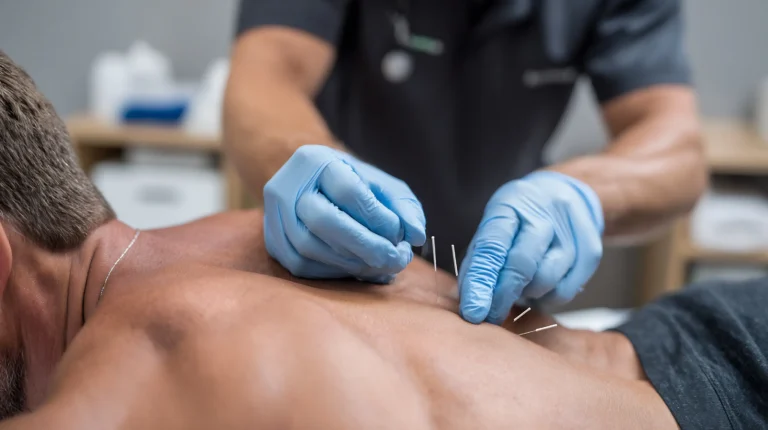
Dry needling is a Western medicine-based technique where a physical therapist inserts thin, sterile needles directly into myofascial trigger points, which are those tight, knotted spots in muscle tissue (called taut bands) that cause localized aching and referred pain patterns into surrounding areas.
Here’s what’s actually happening under the skin: the needle disrupts the trigger point, stimulates blood flow back into the area, and flushes out the acidic metabolic waste that’s been building up and keeping that muscle locked in tension. At the same time, it fires nerve fibers that signal your body to release endorphins. The result is released tension, reduced inflammation, and normal function starting to come back.
What Is the Local Twitch Response?
One thing that catches people off guard the first time is the local twitch response, which is a brief, involuntary contraction of the muscle when the needle hits the trigger point. It might feel like a quick cramp or jump. That’s actually a good sign. It means the needle reached its target and the muscle fibers are responding.
Physical therapists typically use the in and out technique, a small, precise pistoning motion, to fully engage the trigger point and maximize the healing response. This intramuscular stimulation is what makes dry needling treatment so targeted and effective for musculoskeletal pain.
What Is Traditional Chinese Medicine Acupuncture, and What’s It Trying To Do?
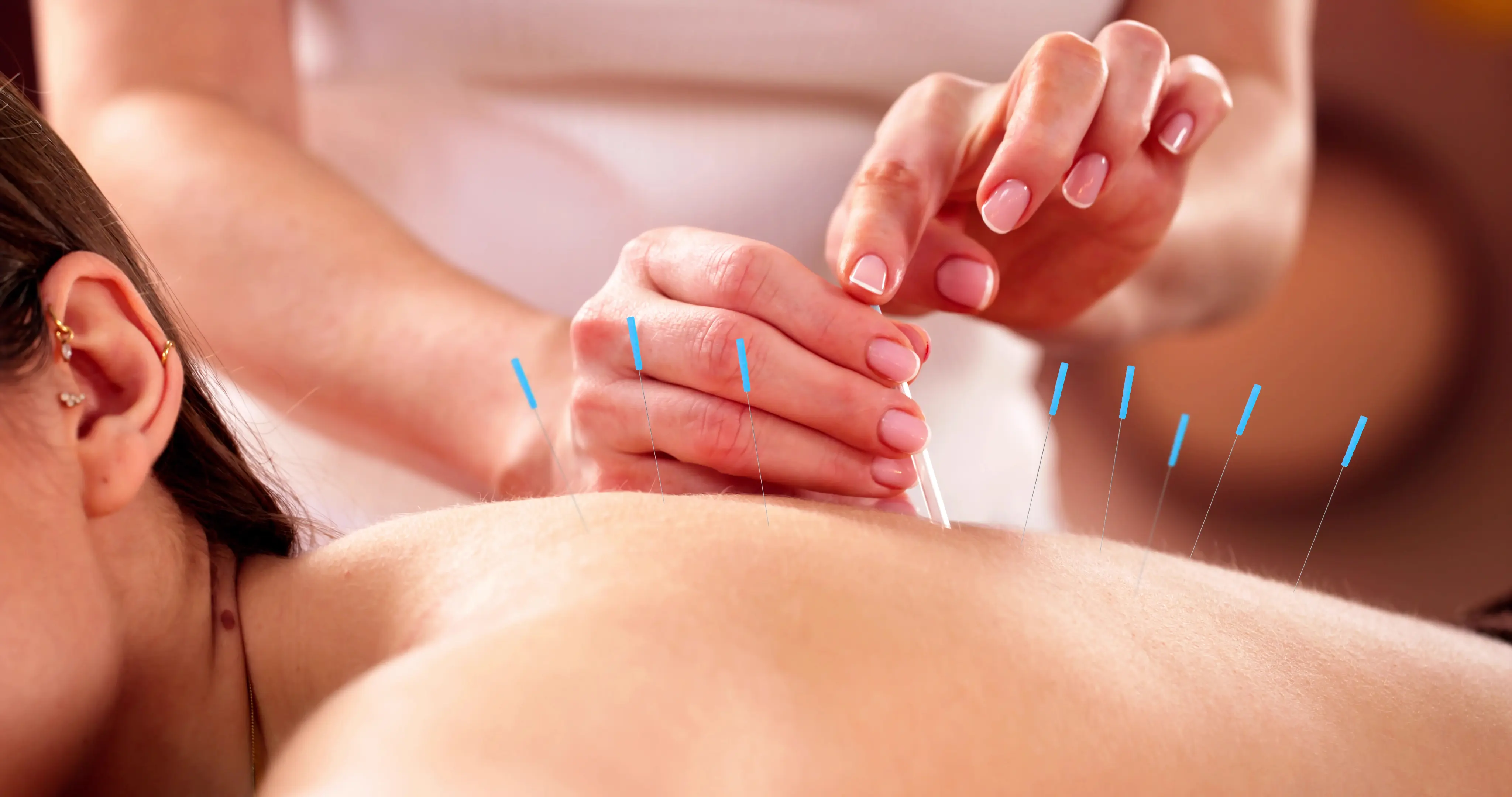
Traditional acupuncture comes from traditional Chinese medicine and has been practiced for thousands of years. Rather than targeting muscle anatomy, it works from the premise that the body has a network of meridian lines through which energy (called Qi) flows. When that energy flow is blocked or disrupted, illness and pain follow. The needles used by licensed acupuncturists are placed along specific points on those meridians to restore balance.
One important distinction: traditional Chinese medicine acupuncture is built to address the whole person, covering digestive issues, systemic conditions, anxiety, sleep, and yes, pain. It’s a broad-scope practice, not a purely musculoskeletal one.
That scope difference is exactly where dry needling and acupuncture start to diverge.
Dry Needling vs. Acupuncture: How Do They Actually Differ?
The needle is about where the similarities end. Everything else — the philosophy behind it, the training required, the session structure, and what it’s designed to treat — is different.
| Dry Needling | Acupuncture | |
| Framework | Western medicine / anatomy | Traditional Chinese Medicine |
| Target | Myofascial trigger points | Meridian line points |
| Practitioner | Licensed physical therapist (with specialized certification) | Licensed acupuncturist |
| Session focus | Specific muscle dysfunction | Systemic balance and wellness |
| Session length | Shorter, targeted | Longer, more holistic |
The American Physical Therapy Association outlines specific scope of practice guidelines for physical therapists performing dry needling techniques, and here in North Carolina, physical therapists are legally authorized to perform dry needling as part of their practice. That means when you’re working with a PT at Bull City, you’re getting needling from someone who is also assessing your movement, your load tolerance, and your full treatment plan, not just the needle itself.
Does Dry Needling Hurt More Than Acupuncture?
This is the question almost everyone asks before their first dry needling session. Here’s the honest answer: Intramuscular stimulation can feel more intense than traditional acupuncture’s lighter needle placement because it’s deliberately engaging dysfunctional tissue. You might feel a deep ache, a brief twitch, or some pressure during the session. Some soreness in the muscle tissue for a day or two afterward is normal — similar to post-workout soreness — and it typically resolves quickly.
Dry needling physical therapy is generally well-tolerated, even by people who are needle-averse. The key is setting honest expectations: it’s not a spa treatment, but it’s also not what most people are imagining before they try it.
If You’re Dealing With Muscle Pain, Which One Is Right for You?
For most active adults dealing with musculoskeletal conditions — sports injuries, myofascial pain syndrome, neck pain, low back pain, chronic pain from overuse, or referred pain that keeps showing up in the same spot — dry needling treatment is the more direct path. It’s built specifically to address muscle tension, muscle activation deficits, and the myofascial pain patterns that limit performance and daily function.
Acupuncture may be a better fit if you’re seeking broader systemic support, such as for stress, sleep, and digestive health, or if you’re drawn to a more holistic, whole-body framework. Neither is wrong. They’re just answering different questions.
What sets dry needling physical therapy apart is that it doesn’t live in a vacuum. At Bull City, dry needling is one tool within a full, personalized treatment plan, used alongside hands-on manual therapy, targeted exercise, and load management to get you back to the run, the lift, or the game that brought you in.
Ready To Stop Managing Pain and Start Moving Again?
Bull City PT offers dry needling in Durham, NC, dry needling in Charlotte, NC, and at our Brier Creek location (which also serves former Cary clients). Dry needling is available as a $15 add-on to any skilled treatment session, or as a standalone service ($99 initial / $50 follow-up).
No referral is needed. North Carolina’s Direct Access law means you can book directly without a primary care order. If you’ve tried PT before and felt like it wasn’t enough, this is a different experience. Schedule your first session and let’s figure out what’s actually going on.
Bull City PT has been recognized multiple times as Indy’s Best Physical Therapy Clinic in the Triangle and holds Three Best Rated recognition — because outcomes matter more than anything else.