



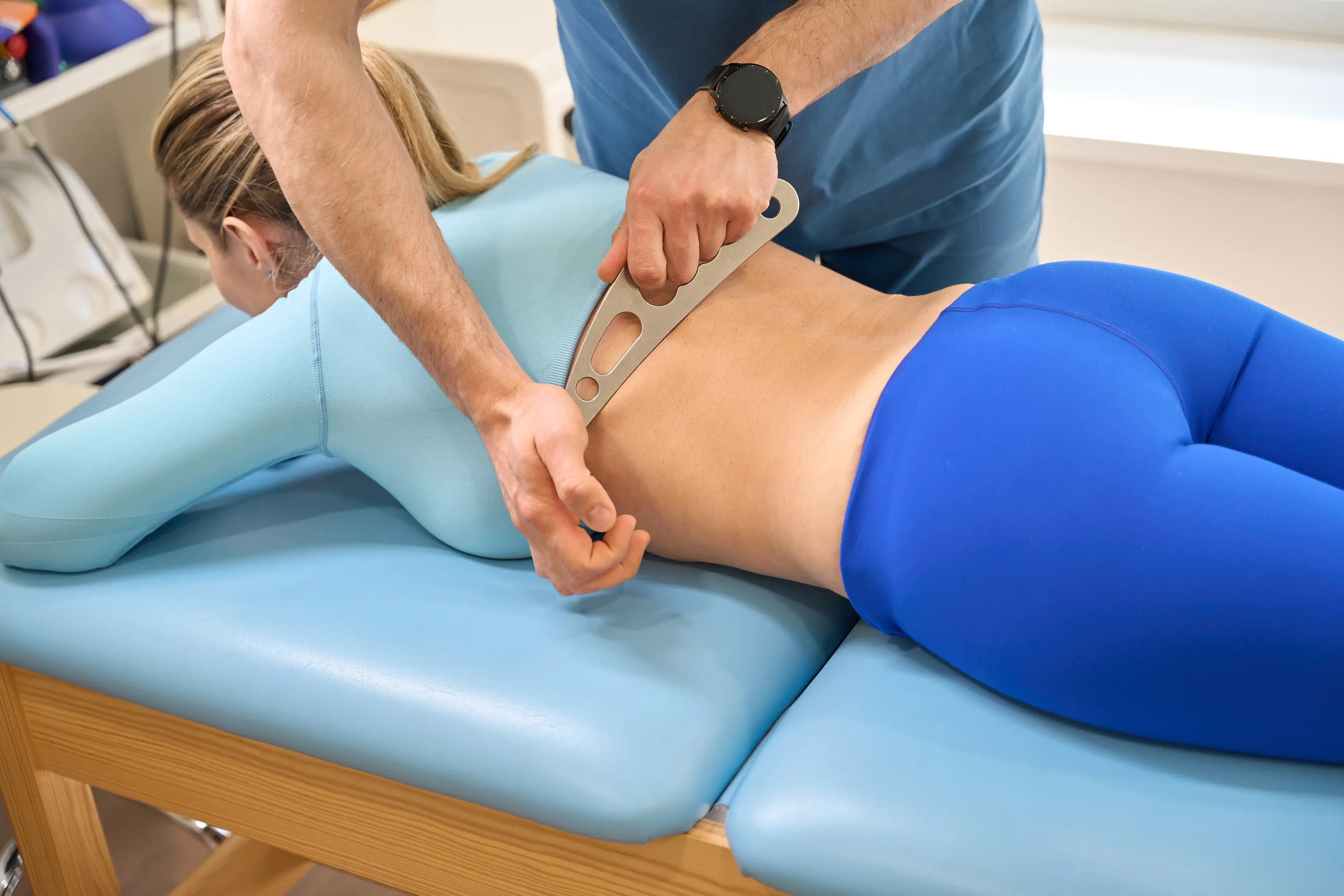
If you’ve seen someone get their calf “scraped” before a race or noticed a therapist running a metal instrument along a shoulder in a PT clinic, you’ve witnessed instrument assisted massage in action. It looks a little intense, but there’s real clinical reasoning behind it. There are a lot of questions worth answering before you decide if it’s the right approach for your recovery.
Let’s start with the basics, then get to what actually matters.
What Is an IASTM Tool, Exactly?
IASTM tools are ergonomically shaped instruments that are usually made from stainless steel or high-grade polymer. These instruments allow a therapist to detect and treat restrictions in soft tissue. During treatment, the tool glides across the skin, transmitting sensory feedback back to the therapist’s hand while creating controlled microtrauma in the targeted tissue. That controlled irritation is the point: it signals the body to kick off a fresh healing response in areas that have stalled or become restricted.
For those exploring a broader guide to cupping therapy for physical therapy, the concept is similar — both IASTM and cupping use mechanical stimulation to encourage circulation and tissue recovery, though cupping works through suction rather than direct instrument pressure.
How Is IASTM Different From a Regular Massage?
Both address soft tissue, but that’s roughly where the similarity ends. A traditional massage relies on the therapist’s hands to apply pressure and work through tension. Instrument assisted soft tissue mobilization adds precision. The tool can reach deeper tissue layers and detect restrictions that hands alone might miss. Think of it less as a rubdown and more as a targeted clinical technique designed to do something specific.
What Makes One IASTM Tool Better Than Another?
Not all IASTM tools are created equal. The factors that matter most in a clinical setting are material, edge design, size, and ergonomics. These aren’t just spec-sheet details. They translate directly into what a therapist can feel, how much pressure they can apply with control, and how precisely they can work across different body parts.
Stainless Steel vs. Plastic — Does the Material Really Matter?
Yes, and it’s not a small difference. Stainless steel conducts vibration from tissue back to the therapist’s hand, giving them real-time feedback about what’s happening beneath the surface. That feedback is what allows an experienced clinician to distinguish healthy tissue from an adhesion or restriction. Plastic and polycarbonate tools cost less and hold up well, but they don’t deliver the same tactile information.
Various shapes and various sizes matter too. Smaller tools allow for deeper penetration and precision in tight areas like the forearm or ankle. Larger, heavier instruments cover broad muscle groups more efficiently. A well-equipped therapist has multiple options and knows exactly which to reach for based on what they’re treating.
Why the Therapist Matters More Than the Tool
Here’s the real answer to the question in the title: the best IASTM tool is the one in the hands of someone who actually knows how to use it.
A high-end stainless steel instrument won’t help much if the clinician doesn’t know which edge to use, how much pressure is appropriate, or how to integrate the technique into a full treatment plan. IASTM techniques require training, feel, and clinical judgment — not just the right equipment. That’s the difference between a session that moves the needle and one that just leaves your skin a little red.
What Conditions Respond Best to IASTM?
IASTM treatment works well across a range of conditions. Tendinopathies like plantar fasciitis, Achilles tendinitis, and tennis elbow respond consistently. So do soft tissue strains and sprains, scar tissue treatment from old injuries, and chronic tightness that’s been limiting your range of motion for months. IASTM for athletes is especially common for a reason. It’s a highly effective treatment when applied by someone who knows what they’re doing.
What Should You Expect During IASTM Treatment at Bull City PT?
IASTM physical therapy at Bull City PT isn’t a standalone add-on. It’s woven into a personalized session based on what your body actually needs that day. Treatment typically takes 10–15 minutes within a normal appointment, and some mild redness or temporary soreness afterward is completely normal and resolves quickly.
Most patients notice meaningful improvement within a few sessions. Because every plan is built around your specific condition and goals rather than a generic protocol, the approach adjusts as you progress. No cookie-cutter methods here.
Ready To Find Out if IASTM Is Right for You?
The best way to know whether IASTM treatment fits your situation is to talk to someone who can actually assess you. No referral is needed. Bull City PT offers Direct Access, so you can get started right away.
Our specialists offer physical therapy in Durham, NC, physical therapy in Charlotte, NC, and physical therapy in Brier Creek, NC (including the Cary area). A multiple-time Best of the Triangle winner and 2025 Indy Best PT Clinic, Bull City PT is built for active adults who want real results and a team that’ll actually push them to get there.
Book your first appointment today, and let’s figure out together what’s standing between you and getting back to what you love.