



You just had rotator cuff surgery, and now you’re wondering what comes next. Here’s the reality: the surgery was just the first step. What happens in the weeks and months ahead with physical therapy after rotator cuff surgery will determine whether you get back to lifting, throwing with your kids, or crushing that tennis serve—or whether you’re stuck with a shoulder that never quite feels right.
Let’s dive in!
What Happens During Post-Surgical Physical Therapy for a Rotator Cuff?
Physical therapy after rotator cuff surgery rebuilds your shoulder’s strength and mobility through a carefully phased program tailored to your specific tear size and your surgeon’s protocol. Your physical therapist works with you to restore function in stages—starting with gentle movement and gradually building to full strength.
This isn’t about getting you pain-free and calling it done. It’s about getting you back to doing what you love.
When Should You Start Physical Therapy After Rotator Cuff Surgery?
Most patients begin PT sessions within one to two weeks after surgery, though timing depends on your surgeon’s protocol and tear size. Starting early helps prevent stiffness while protecting your surgical repair as it heals.
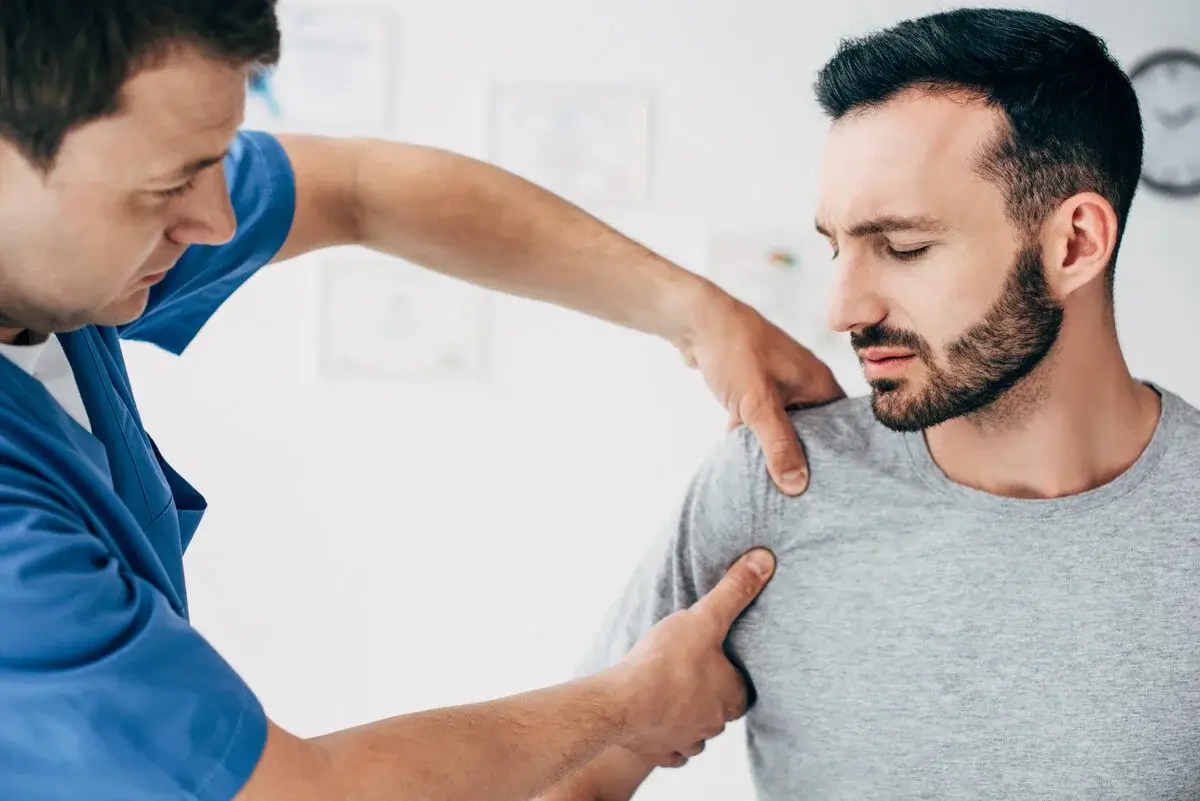
During those first few weeks, you’ll wear a sling to protect your affected arm. Your therapist will work with your upper arm through gentle passive range of motion exercises, where they move your arm for you without any muscle activation from your rotator cuff muscles.
What Kind of Physical Therapy After Rotator Cuff Surgery?
Rotator cuff repair rehabilitation follows distinct phases. In the first 6-8 weeks, your physical therapist focuses on passive range of motion exercises: table slides, pendulum swings, and gentle movements that maintain mobility without stressing the healing tendon.
Around weeks 6-8, you’ll transition to active-assisted movement, where you use your other arm or props to help. By week 12, you’re ready for active strengthening of your supraspinatus, infraspinatus, subscapularis, and teres minor—the four muscles that make up your rotator cuff.
Later phases include manual therapy techniques, progressive strengthening exercises after rotator cuff surgery, and functional training that mimics your specific activities. Whether you’re getting back to the gym or just want to sleep on that shoulder again, your program adapts to your patient’s goals.
Why Is Physical Therapy Critical After Rotator Cuff Surgery?
Your rotator cuff healing timeline depends on controlled stress applied at the right time. According to research, patients take an average of 14 months to fully recover their daily motion after surgery, with smaller tears recovering faster than larger ones.
Physical therapy after rotator cuff surgery guides this process by progressively loading the healing tissues, preventing adhesions, and rebuilding neuromuscular control. Your body needs strategic movement to form strong scar tissue—not just any movement, but the right movements at the right intensity.
What Happens If You Don’t Do PT After Rotator Cuff Surgery?
Skip PT, and you risk developing frozen shoulder, losing strength permanently, or re-tearing the repair. Your shoulder may heal, but it won’t perform. Many people who skip PT end up back at the clinic months later, trying to fix preventable complications.
How Long Do You Need PT After Rotator Cuff Surgery?
Most patients need physical therapy for 4-6 months after rotator cuff repair surgery, though complete recovery can take 6-12 months for severe tears. This isn’t just about doing exercises, it’s about systematically rebuilding function.
You’ll progress from passive range of motion exercises to active range of motion to strengthening, with each phase building on the last. Your therapist adjusts the timeline based on how your tissues respond and what your surgeon’s protocol requires.
What Factors Affect Your Recovery Timeline?
Tear size impacts everything. Small tears typically heal within four months, while large or massive tears can require 8-12 months of rehabilitation. Tissue quality, your age, and whether you smoke also affect how quickly you heal.
But here’s what matters most: adherence. Patients who consistently do their home exercises and show up for PT sessions recover faster and more completely. That’s where working with a clinic that actually pushes you makes the difference.
What Movements Should You Not Do After Rotator Cuff Surgery?
During those critical first 6 weeks, absolutely no active lifting with your affected arm—your rotator cuff muscles can’t handle the load yet. Avoid reaching away from your body, no weight bearing through your elbow or wrist, and don’t try to lift anything, even your coffee cup.
Later, your therapist will guide you on when it’s safe to progress. Trying to rush it by pushing through pain or ignoring restrictions can significantly impact your outcome—and not in a good way.
What Makes Post-Surgical Rotator Cuff PT at Bull City Different?
Bull City PT isn’t your standard cookie-cutter clinic where everyone gets the same three exercises photocopied from a binder. We specialize in motivated, active adults who have tried PT before and found it underwhelming. People who want to actually get back to what they were doing, not just move their arm pain-free at a table.
Our therapists create personalized treatment plans based on your specific surgical repair, your surgeon’s protocol, and what you’re trying to get back to doing. Whether that’s CrossFit, playing with your grandkids, or getting back to work without restrictions, we build a program that gets you there.
We’re part of the community—we’ve won Best of the Triangle twice, we have a beer named “Aches and Alements,” and we genuinely like having fun while getting serious results. With Direct Access, you can start PT without jumping through referral hoops, and our elevated patient experience means better communication, better outcomes, and treatment that’s actually tailored to you.
Ready to Get Your Shoulder Back?
Don’t settle for a recovery that leaves you wondering what could have been. Contact Bull City PT today to schedule your evaluation and start working with therapists who’ll push you appropriately toward real progress.