



You’ve seen the circular marks. Maybe it was Michael Phelps at the 2016 Olympics, shoulders covered in dark, perfectly round spots while he warmed up for another gold medal. Maybe it was someone at your gym, or a friend who mentioned it after a PT appointment. Either way, you’re curious — and maybe a bit skeptical.
Cupping therapy looks weirder than it is. Once you understand what’s actually happening under the skin, it makes a lot of sense, especially if you’re dealing with stubborn muscle tightness, a nagging injury, or the kind of pain relief that’s been just out of reach no matter what you’ve tried. Whether you’re training for a race, trying to get back to the gym, or just want to pick up your kids without that familiar twinge in your back, this is worth understanding. Let’s get into it.
How Does Cupping Therapy Work?
Cupping therapy works by using suction to lift soft tissue upward, which is the opposite of what most manual therapies do. Instead of pressing down, cups create negative pressure that pulls skin, fascia, and underlying tissue away from the structures beneath it. That decompression is the whole mechanism.
How Is Cupping Therapy Different From a Massage?
The short answer: massage pushes tissue together; cupping pulls it apart. That difference matters more than it sounds.
When a cup is applied and suction kicks in, creating negative pressure draws blood flow to the surface, opens up the connective tissue, and creates space between layers that may be stuck together. This is the core of myofascial decompression: releasing restrictions in the fascia, the web of tissue that connects everything in your body and plays a major role in how freely you can move.
The result is increased blood flow to the area, which actively supports the healing process and helps promote healing in chronically irritated tissue. At the same time, cupping encourages lymphatic drainage, clearing out metabolic waste that accumulates after training or injury. Understanding the power of cupping therapy helps explain why this approach is effective for recovery and tissue health. Think of it less like a recovery shortcut and more like resetting the tissue environment, creating the conditions your body needs to actually respond to the rest of your treatment. Together, those effects work toward reducing inflammation, loosening up tight muscles, and improving overall mobility in a region. It’s a different tool for a different job, and for a lot of active adults, it fills a gap that massage alone can’t.
What Are the Different Types of Cupping Used in Physical Therapy?
Not all cupping is the same, and that context matters, especially when you’re trying to understand what a physical therapist would actually use versus what you’d encounter at a spa or an acupuncture clinic.
What’s the Difference Between Dry Cupping and Wet Cupping?
Dry cupping is the standard in PT settings, and it’s almost certainly what you’ve seen. Cups (typically silicone or plastic) are placed on the skin, suction is applied, and the cups either stay in place (static dry cupping) or are moved through a range of motion (dynamic cupping). No skin is broken. The whole process is straightforward, controlled, and clean.
Wet cupping is a different approach entirely. It involves making small incisions in the skin before applying the cup, drawing out a small amount of blood. This practice is rooted in traditional medicine and is typically performed by acupuncturists, not physical therapists. It’s not part of a standard PT session.
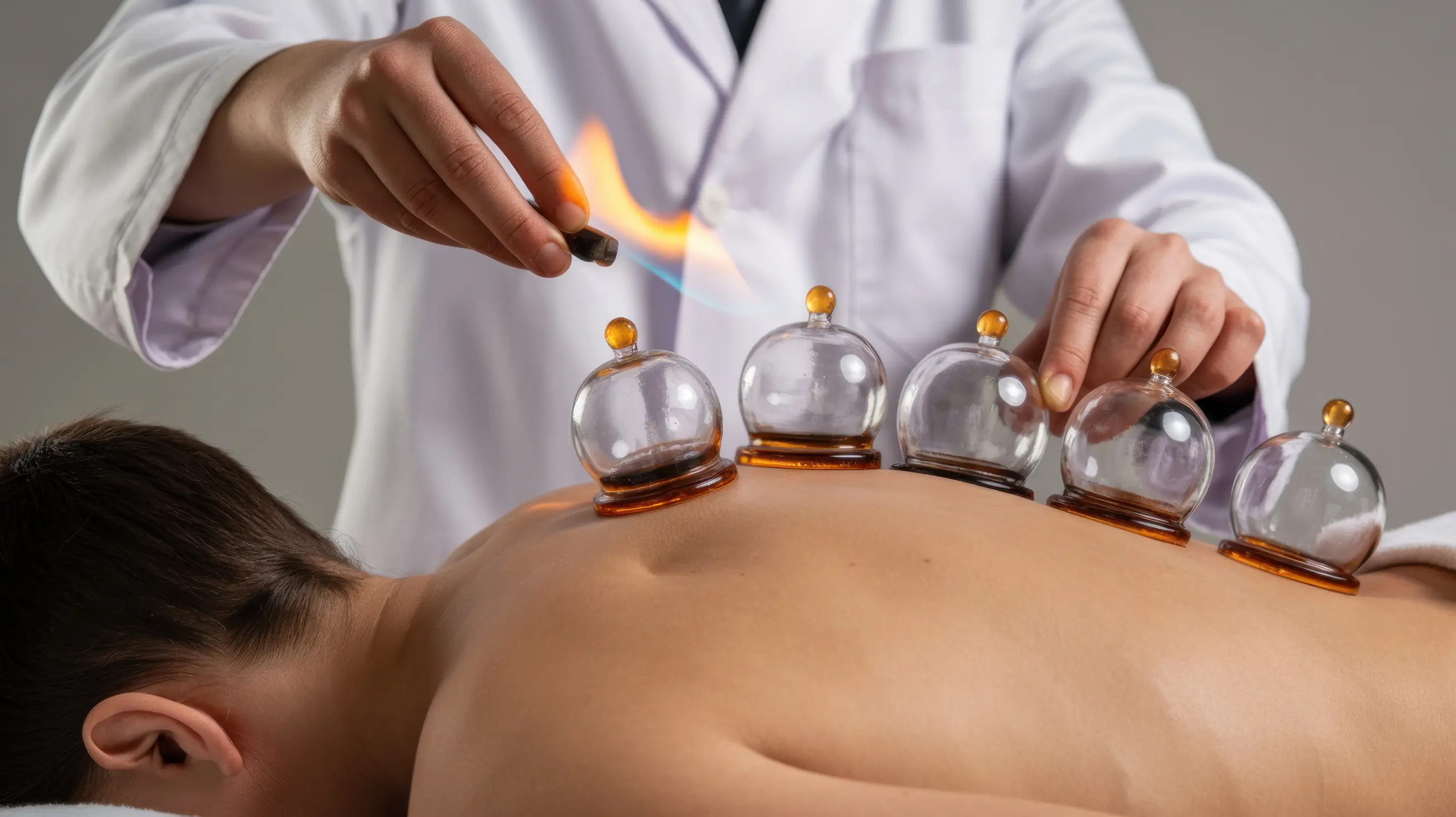
Fire cupping, where heat creates the suction, is worth mentioning as a historical and culturally significant practice, but you won’t find it in a clinical PT environment either.
At Bull City PT, the focus is on dry cupping and dynamic cupping techniques that work alongside movement, not in isolation. Each cupping method is evidence-informed and integrated into your session with a specific clinical purpose in mind.
What Conditions Can Cupping Therapy Help With?
Cupping therapy can help with various conditions. Let’s take a look at some of the issues that cupping is often used to address.
Chronic Pain, Muscle Tightness, and Sports Recovery
For active adults dealing with chronic pain or soft tissue issues, the benefits of cupping are real. However, it’s worth noting that the research is still developing, and cupping works best as part of a comprehensive plan, not as a cure-all. Here’s where it tends to show up most in treatment:
Muscle pain and tightness — When muscle tension isn’t released with traditional manual work, cupping can decompress tissue layers that are functionally stuck, giving tight muscles room to breathe and respond to treatment.
Musculoskeletal pain — For back pain, neck pain, shoulder impingement, and hip tightness, cupping is a useful tool for pain relief when conventional therapy alone isn’t moving the needle. The benefits of cupping therapy here are less about a dramatic fix and more about changing the tissue environment so other interventions can do their job.
Scar tissue and fascia restrictions — Scar tissue that limits range of motion is a common use case, particularly post-surgery or after significant injury. Cupping mobilizes that tissue gently in a way that complements hands-on work without being overly aggressive.
Sports recovery and muscle soreness — Improved blood circulation genuinely helps flush out the byproducts of hard training. For athletes managing muscle soreness between sessions, cupping can be a useful part of the recovery toolkit.
What really separates PT-based cupping from a spa treatment is movement retraining. A physical therapist doesn’t place cups on you and disappear. They pair cupping with active movement, mobility exercises, and exercises designed to reinforce better patterns while tissue is in a decompressed state. Your nervous system learns movement in the context of reduced restriction, which is a very different outcome than just feeling looser for a day. That integration is where the lasting benefit comes from.
What Should You Expect During a Cupping Session?
At Bull City PT, a cupping session isn’t a separate appointment or a specialty add-on. It’s woven directly into your regular treatment — typically 5 to 15 minutes — and applied based on what your body actually needs that day. There’s no upcharge, no separate booking, no “cupping package.” Your licensed physical therapist makes that call based on your presentation, not a preset protocol.
Does Cupping Therapy Hurt?
Most people describe cupping as a stretching sensation, a pulling pressure that can feel intense but isn’t painful. If a cup feels too aggressive, your therapist adjusts it on the spot. Communication throughout the session is the whole thing.
The circular marks — we call them cupping kisses — are real and expected. They’re not bruises in the traditional sense; they’re the result of blood and metabolic byproducts being drawn to the surface. They typically fade within a few days to a week, depending on your circulation and how your body responds. They look more dramatic than they feel. And yes, you can absolutely go about your day afterward. Most people leave a session feeling looser and moving better, not sidelined.
Your personalized treatment plan determines how cupping fits in. For some people, it’s a consistent part of every visit. For others, it’s deployed strategically when a specific tissue needs attention. Either way, it’s one tool among many, and it’s always connected to the bigger goal of getting you back to your something.
Is Cupping Therapy Right for You?
For most healthy, active adults dealing with soft tissue or musculoskeletal pain issues, cupping is a low-risk therapy when administered by a trained physical therapist who understands your full clinical picture. The benefits of cupping are generally well-tolerated, and the risk profile is low compared to many other interventions.
Who Should Avoid Cupping Therapy?
There are situations where cupping isn’t appropriate, and your PT will screen for these before applying cups:
- Open wounds or active skin infections in the target area
- Bleeding disorders or current anticoagulant medications
- Certain skin conditions, like active eczema or psoriasis, over the treatment area
- Active vascular conditions in the region that is being treated
This isn’t meant to be alarming. It’s just how a trained clinician assesses fit. Most people are good candidates. If you’re not sure what cupping therapy is in the context of your specific situation, the most direct path is a conversation with a physical therapist who can evaluate you properly.
Ready to Get Back to Your Something?
Bull City PT has been voted Best of the Triangle, and we bring that same level of personalized, active-adult-focused care to our Brier Creek, Charlotte, and Durham locations. Whether cupping is part of your plan or not, you’ll get a treatment approach built around you, not a cookie-cutter protocol.
The best part? You don’t need a doctor’s referral to get started. Direct Access means you can book directly with Bull City PT for physical therapy in Brier Creek, NC, physical therapy in Durham, NC, or physical therapy in Charlotte, NC.
Contact us at Bull City PT. Let’s figure out what’s going on — and get you back to it.